If you’ve been in practice for any amount of time, you’ve probably heard the same thing over and over again.
“You need SEO.”
It comes up in emails, sales calls, conferences, and conversations with other dentists. And if you’re being honest, part of you has probably wondered if it’s actually true or just another marketing trend that sounds good but does not really move the needle.
That skepticism is completely fair.
Dentists have been pitched everything from social media strategies to paid ads to reputation systems, and a lot of it promises big results without clearly explaining how it works or what kind of return you should expect. So when someone brings up dental SEO, it is natural to question it.
The real question most dentists are asking is not “what is SEO?” It is much more practical than that.
It is “Is dental SEO worth it for my practice, or is this just hype?”
Let’s walk through that in a real way, without overcomplicating it.

Why Dentists Are More Skeptical About SEO Than Ever
There was a time when SEO sounded like a silver bullet. Rank number one on Google and the patients would come in automatically. That idea stuck around for a while, and a lot of marketing companies leaned into it.
The problem is that many dentists tried it and did not see the results they expected.
They invested in SEO, waited months, and maybe saw some ranking improvements. But the phone did not ring more. New patient flow did not change much. And the reporting often felt vague or disconnected from actual production.
That experience is exactly why so many dentists today question whether dental SEO actually works.
The truth is that the frustration is valid. But it is not because SEO itself is hype. It is because the way SEO was often executed did not match what actually drives patient behavior.
Ranking alone is not enough. Visibility without trust does not convert. Traffic without clear messaging does not turn into appointments.
That is where the conversation has shifted.
How Patient Search Behavior Has Changed
If you think about how patients used to search, it was pretty simple. They would type in something like “dentist near me” or “teeth cleaning cost” and scroll through a list of results.
Now the way people search has become much more specific.
Patients are asking full questions like:
- What is the best dentist near me that takes my insurance
- Why does my tooth hurt when I bite down
- Is Invisalign worth it for adults
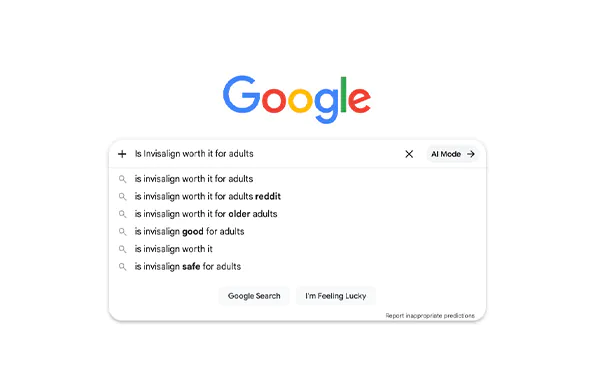
And more importantly, they are not just asking Google. They are asking AI tools like ChatGPT and other platforms that give direct answers instead of a list of links.
This shift matters more than most dentists realize.
Because instead of competing for a spot on a results page, you are now competing to be the answer that gets recommended. That requires a different approach to your website and your content.
This is where modern dental SEO becomes extremely valuable. It is not just about showing up. It is about being understood, trusted, and chosen.
Do Dentists Actually Need SEO
The honest answer is that not every single practice needs SEO in the same way. If you already have a full schedule, strong referral systems, and no desire to grow, then you may not feel an urgent need for it.
But that is not the situation for most dentists.
Most practices want more consistency. They want to attract better patients, reduce reliance on insurance, and create a more predictable flow of new appointments. They want their marketing to feel less like guesswork and more like a system.
In that context, SEO becomes very relevant.
If your website exists but is not bringing in calls, or if you rely heavily on paid ads to generate new patients, then SEO is not just a nice addition. It becomes a foundational part of your strategy.
This is why questions like “do dentists need SEO” and “is dental SEO worth it” are being asked more often. Dentists are not looking for theory. They want proof that it actually impacts their practice.
Why Many Dental Websites Get Traffic but No Calls
One of the most common situations we see is a practice that technically has SEO in place.
They show up on Google. They get website traffic. Analytics look decent.
But the phone is still not ringing the way it should.
This is where a lot of dentists start to feel like SEO does not work.
What is really happening in these situations is not an SEO failure. It is a conversion problem.
Most dental websites are built with a focus on visibility rather than clarity. They list services, include some keywords, and provide general information. But they do not answer the real questions patients have when they are deciding whether to call.
A patient who lands on your site is trying to answer a few simple questions in their mind.
Can this dentist help me
Do I feel comfortable with them
Is this the right choice for me
If your website does not clearly answer those questions, they leave. It does not matter how they found you.
That is why traffic alone is not a reliable measure of success. What matters is whether that traffic turns into conversations and appointments.

What Dental SEO Looks Like When It Actually Works
When SEO is done correctly, it goes far beyond rankings.
It starts with understanding how patients think and what they are searching for. Instead of focusing only on broad terms, it targets the specific questions and concerns people have before they choose a dentist.
For example, a well-optimized service page for dental implants should not just describe the procedure. It should explain who is a good candidate, how long the results last, what recovery looks like, and what financing options are available. It should also answer common questions in a clear and simple way.
This kind of content does two things at the same time.
It helps search engines and AI tools understand what you offer, and it helps patients feel confident in their decision to contact you.
That is why phrases like “dental SEO case studies” and “dental SEO ROI proof” matter. Dentists are not looking for vague promises. They want to see how this approach translates into real outcomes.
Is Dental SEO Worth It From an ROI Perspective
At the end of the day, every marketing decision comes down to return on investment.
Paid advertising can generate quick results, but it requires ongoing spending. The moment you stop, the flow of leads slows down. SEO, on the other hand, builds over time.
It takes longer to gain traction, but once it does, it continues to produce results without requiring you to pay for every click.
This is why many practices use a combination of both. Ads provide immediate visibility, while SEO builds a long-term foundation.
When SEO is working, it creates a steady stream of patients who are actively searching for what you offer. These patients often come in with higher intent because they found you while looking for a specific solution.
Over time, this reduces your dependence on paid channels and gives you more control over your growth.
That is where the real value shows up.
A Real Example of Dental SEO in Action
One of the best ways to understand whether something works is to look at a real example.
Dr. Anderson was in a position that will sound familiar to a lot of dentists. He had tried marketing before and was not fully convinced that SEO would deliver meaningful results. There was a level of skepticism, and rightfully so.
Instead of chasing rankings alone, the focus shifted to improving how his website communicated with patients. That meant clearer messaging, more helpful content, and a strategy built around answering the questions people were already asking.
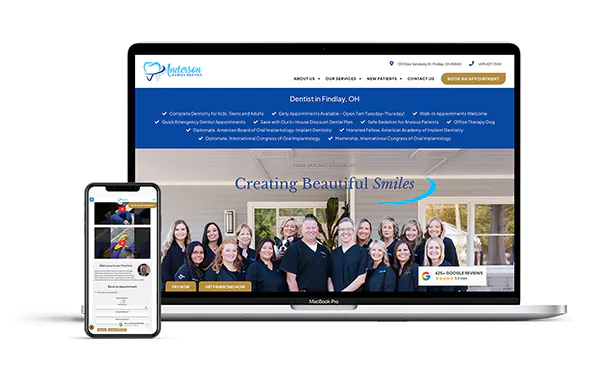
The outcome was not just better visibility. It was more qualified calls and a more predictable flow of new patients.
If you want to see exactly how that played out, you can take a look here:
https://www.firegang.com/anderson/
This is a strong example of how dental SEO results are not based on guesswork. They can be measured, tracked, and improved over time.
Why Some Dentists Still Believe SEO Is Hype
Even with examples like that, it is understandable why some dentists remain skeptical.
A lot of it comes down to past experiences.
If SEO was treated as a simple checklist, where keywords were added and blog posts were published without a clear strategy, then the results were probably underwhelming. If there was no connection between the content and actual patient decisions, then it felt disconnected from real growth.
There is also the issue of outdated approaches. The way search worked five or ten years ago is not the same as it is today. Practices that are still using those methods are going to struggle.
So when someone says SEO did not work for them, it is usually not because SEO itself is ineffective. It is because the execution did not align with how patients search and choose a dentist now.
The Shift Toward Answer-Based Content
One of the biggest changes in digital marketing is the move toward answer-based content.
Instead of focusing only on keywords, successful practices are focusing on answering real patient questions in a clear and straightforward way.
This is often referred to as Answer Engine Optimization, or AEO.
The idea is simple. If a patient asks a question, whether on Google or an AI tool, your content should provide a helpful and easy-to-understand answer.
When that happens consistently, your website becomes a trusted source of information. That increases the likelihood that both search engines and AI platforms will recommend you.
It also increases the likelihood that patients will choose you once they land on your site.
This is why the line “AI cannot recommend what it cannot understand” is so important. If your website does not clearly explain what you do and who you help, it becomes much harder to show up in these new types of searches.

So Is Dental SEO Hype or Not
At this point, the answer should be pretty clear.
SEO itself is not hype. But not all SEO is created equal.
When it is done poorly or based on outdated strategies, it can feel like a waste of time and money. When it is done with a clear focus on patient behavior, communication, and conversion, it becomes one of the most reliable ways to grow a practice.
That is why more dentists are revisiting SEO now, even if they were disappointed in the past.
The landscape has changed, and the approach has evolved with it.
What This Means for Your Practice
If you have been questioning whether dental SEO is worth it, you are not alone. It is a smart question to ask before investing in anything.
The key is not just deciding whether to do SEO, but understanding what kind of SEO will actually move your practice forward.
That means focusing on content that answers real questions, building trust through clear communication, and creating a website experience that makes it easy for patients to take the next step.
When those pieces come together, SEO becomes much more than a marketing tactic. It becomes a growth system.
Want to See What This Looks Like for You
If you are trying to figure out whether SEO makes sense for your practice, or why your current efforts are not producing results, it helps to look at your situation with a clear and experienced perspective.
At Firegang, we focus on helping practices build systems that attract the right patients and convert them into scheduled appointments.
If you are looking for the best dental marketing company to guide you through SEO, AI search, and patient conversion, the next step is simple.
Schedule a complimentary practice growth assessment call.
We will take a look at your current online presence, identify where you are missing opportunities, and give you a clear plan for what to do next.
No pressure. Just a straightforward conversation about what is possible for your practice.