Dental website visitors not booking is one of the most frustrating problems dentists face today.
If your dental website is getting traffic but your phone is still quiet, you are not imagining things.
This is one of the most frustrating spots a dentist can be in. You look at your website numbers and see visitors coming in. Your impressions are up. Maybe your rankings look decent. Maybe your Google Business Profile is getting seen. On paper, it seems like your marketing should be working.
But then you look at what actually matters.
Not enough calls.
Not enough forms.
Not enough scheduled new patients.
If that sounds familiar, the problem usually is not that your website is invisible. The problem is that your dental website visitors are not booking.
And honestly, this happens to a lot of practices.
A website can bring in visitors and still do a poor job of turning those visitors into action. So if you are wondering why your dental website visitors are not booking, the answer is usually not “you need more traffic.” It is usually that something in the patient journey is broken.
Let’s walk through why this happens, what causes high impressions and low conversions, and what you can do to fix it.
The Real Problem: Website Traffic Not Converting
A lot of dentists have been taught to look at traffic as the main scorecard.
More clicks must be better, right?
Not always.
Traffic by itself does not grow a practice. The right traffic, paired with the right website experience, is what drives new patient calls and booked appointments.
This is why some practices get thousands of visitors and still struggle to fill the schedule, while another practice with less traffic books more consistently. One site is attracting attention. The other is creating action.

So if your website traffic is not converting, it usually points to one of these issues:
- The wrong people are landing on the site
- The right people are landing there, but the page does not build trust
- The website makes it too hard to take the next step
- Your content ranks, but it does not answer what patients actually care about
- Your overall dental SEO is focused on visibility instead of conversion
That last point matters more than a lot of dentists realize.
Your dental SEO isn’t optimized for conversions if you have traffic but no calls
Why Dental Website Visitors Are Not Booking
1. Your Website Is Attracting Traffic, But Not Buyer Intent
Not all website visitors are equal.
Some people are casually browsing. Some are comparing practices. Some are students doing research. Some are looking for a service you do not even offer. And some are ready to book now.
If your site is getting found for broad or low-intent searches, you may see a lot of visitors without seeing much movement in your schedule.
For example, ranking for a general phrase like “dental crowns” may bring in traffic. But ranking for a phrase like “emergency dentist near me open Friday” or “best Invisalign dentist in [city]” often brings in people much closer to booking.
This is one reason high impressions and low conversions happen. You might be showing up often, but not for searches that lead to real action.
The fix is to focus your dental SEO strategy around intent, not just traffic volume. The best-performing pages tend to target specific services, specific patient concerns, and specific local searches.
That means building content around what patients are actually asking, such as:
- How much do dental implants cost?
- Do you take my insurance?
- What does Invisalign treatment involve?
- Can I get in this week?
- Do you treat nervous patients?
- What should I do if my tooth cracks?
When your content speaks directly to those questions, you start bringing in visitors who are much more likely to convert.

2. Your Service Pages Are Too Thin
A lot of dental websites technically have service pages, but those pages are not doing much heavy lifting.
Maybe the page is only a few paragraphs long. Maybe it sounds generic. Maybe it could belong to almost any dentist in the country. Maybe it says what the service is, but not why a patient should choose your office for it.
This is a huge problem in both SEO and conversion.
If a page lacks depth, it is harder for Google and AI tools to understand it. And if it lacks specifics, it is harder for a patient to trust it.
Your page should not just say you offer dental implants. It should answer the questions a real patient has before they ever call.
Things like:
- Who is a good candidate?
- What does the process look like?
- Is it painful?
- How long does it take?
- What financing options are available?
- Why should someone trust your team for this procedure?
This is where a lot of practices lose people. The visitor lands on the page, scans it, and leaves because it feels vague or incomplete.
It is not your traffic. It’s your dental SEO page quality.
It’s not your traffic. It’s your dental SEO page quality
3. Your Website Looks Fine, But It Does Not Build Enough Trust
Dentists are often surprised by this one.
A website can be clean and modern and still fail to convert.
Why? Because a nice-looking website is not the same thing as a trust-building website.
Patients are not just asking, “Does this office offer what I need?” They are asking:
- Can I trust this team?
- Will I be comfortable here?
- Are they experienced?
- Will they explain things clearly?
- Will they pressure me?
- Do they work with patients like me?
If your website does not answer those emotional questions, people hesitate.
Strong trust signals include:
- Real team photos
- Dentist bios with actual personality
- Reviews throughout the site, not buried on one page
- Before-and-after images where appropriate
- Clear explanations of services
- Mention of technology, experience, training, or continuing education
- Membership plans, financing, or insurance guidance
- A welcoming tone that sounds human
This matters even more now because AI search tools are pulling from content that appears clear, helpful, and credible. A generic site with weak trust signals is less likely to stand out there too.
4. Your Calls to Action Are Weak or Easy to Miss
Sometimes the issue is not deep or technical at all.
Sometimes the website simply does not make the next step obvious.
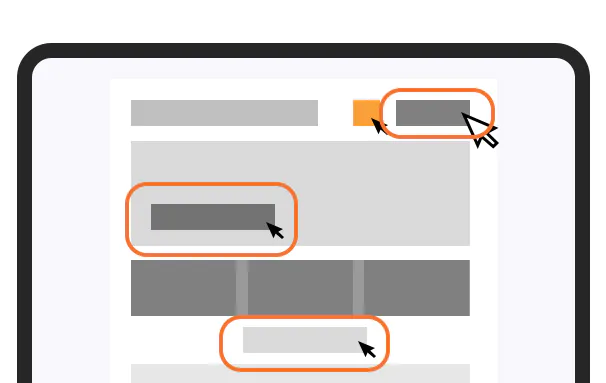
If a patient has to hunt for the phone number, click through multiple pages to request an appointment, or guess what they should do next, conversion rates drop.
A lot of dental websites assume visitors will take initiative. Most won’t.
Your website should guide people clearly.
Good calls to action are specific and visible. Instead of vague buttons like “Learn More,” stronger options include:
- Schedule Your Visit
- Book a New Patient Appointment
- Call Our Office Today
- Request Your Implant Consultation
- Schedule a Complimentary Second Opinion
These should appear high on the page, throughout the content, and again near the bottom.
And your contact experience needs to be easy on mobile. If the site is hard to navigate from a phone, or your forms are clunky, you are losing people.
5. Your Website Is Answering Search Engines Better Than It Answers Patients
This happens a lot when SEO is approached too mechanically.
Some websites are built to rank but not to persuade. They contain the right keywords, the right headings, and maybe even the right metadata, but the content does not feel helpful or personal.
Patients can tell.
They land on the page and see a wall of generic text. No real warmth. No clarity. No sense of what makes your office different.
That is where AI search is changing the game. Tools like ChatGPT, Perplexity, and Claude are rewarding content that sounds natural, answers questions directly, and helps users make decisions.
That means your website needs to do more than mention procedures. It needs to explain them in a way real people understand.
If your dental website visitors are not booking, this could be one of the biggest reasons why. The content may technically rank, but it is not converting because it is not written for a worried, busy, comparison-shopping human being.
6. Your Pages Do Not Match the Visitor’s Stage of Decision
A person looking for a dentist is not always ready for the same next step.
Some need reassurance. Some need pricing information. Some need to know you treat kids. Some need to know you can handle emergencies. Some are ready to schedule right now.
When every page pushes the same message without considering where the visitor is mentally, conversions suffer.
For example:
- A nervous patient may need comfort messaging and social proof
- An implant patient may need cost and financing info
- A cosmetic patient may want before-and-after examples
- An emergency patient wants speed, location, and immediate action
Your pages should meet patients where they are instead of expecting everyone to be ready for the same CTA.
7. Your Website Speed, Mobile Experience, or User Flow Is Hurting You
This one gets overlooked all the time.
A slow site or awkward mobile layout can quietly kill conversions. Not because patients think, “This site is 2.7 seconds too slow,” but because the overall experience feels frustrating.
People leave when:
- Buttons are hard to click on mobile
- Pop-ups block important content
- Pages take too long to load
- Contact forms are too long
- Important information is buried
- The design feels cluttered or outdated
Many dental practices now get the majority of their traffic from mobile devices. If your mobile experience is weak, your conversion rate will suffer even if rankings improve.
How to Fix Dental Website Visitors Not Booking
Now let’s talk fixes.
If you want to improve conversion rate as a dentist, start here.
Fix #1: Rework Your Highest-Traffic Service Pages First
Do not try to overhaul everything at once.
Start with the pages already getting attention. These pages are your easiest win because the traffic is already there.
Look at the pages with the most visits and ask:
- Does this page clearly explain the service?
- Does it answer real patient questions?
- Does it show why our office is the right choice?
- Is there a strong CTA near the top and bottom?
- Does it build trust quickly?
Often, improving one or two major service pages can create a noticeable lift in leads.
Fix #2: Add More Conversion-Focused Content
If a page ranks but does not convert, it probably needs more substance.
Add sections that speak to patient concerns, such as:
- What to expect
- Cost and financing
- Who this treatment is for
- Common fears or misconceptions
- FAQs
- Why patients choose your office
- Next steps
This helps with both SEO and conversion because it gives search engines more context and gives patients more confidence.
See how conversion-focused dental SEO fixed this for Dr. Anderson
Fix #3: Make Your CTAs Impossible to Miss
Every important page should make the next step obvious.
That means clickable phone numbers, clear buttons, short forms, and repeated opportunities to contact your office.
A good rule of thumb: if someone lands on the page and is ready to act in 10 seconds, the path should be obvious.
Fix #4: Use Real Proof, Not Generic Claims
Saying “we provide high-quality care” does not move the needle much. Every dental website says some version of that.
What helps more is proof.
Use things like:
- Specific reviews
- Years of experience
- Technology used in the office
- Smile gallery examples
- Patient-friendly financing options
- Doctor credentials
- Comfort-focused amenities
- Community connection
People do not book because you say nice things about yourself. They book when they can picture themselves trusting you.
Fix #5: Align SEO With Conversions, Not Just Rankings
This is where a lot of marketing breaks down.
A practice may rank well enough, but the strategy is incomplete because nobody is looking at what happens after the click.
That is why conversion-focused SEO matters so much. It is not just about getting found. It is about getting chosen.
If your current strategy is chasing impressions without improving content quality, user experience, and page structure, you may keep seeing traffic without meaningful growth.
And to be blunt, that is not a winning marketing system.
What Dentists Should Focus on Next
If you are getting traffic but not enough appointments, here is where I would focus first:
- Audit your top service pages
- Improve trust signals across the site
- Rewrite content to answer real patient questions
- Strengthen CTAs on every major page
- Improve mobile usability
- Target higher-intent local keywords
- Make sure your dental SEO strategy is tied to conversion goals
This is the difference between a website that gets seen and a website that helps grow a practice.
Final Thought: Why Dental Website Visitors Not Booking Isn’t a Traffic Problem
If your dental website visitors are not booking, more traffic may not fix the problem.
In fact, sending more people to a weak page can just magnify the issue.
The better move is to fix the experience first.
When your website is built to answer the right questions, create trust, and guide patients toward action, conversions improve. And when your SEO strategy supports that process, your marketing starts working the way it should.
That is where a lot of dentists finally feel relief. Not because they suddenly doubled traffic, but because the traffic they already had started turning into real opportunities.
If that is where your practice is right now, it may be time to stop asking, “How do I get more clicks?” and start asking, “Why aren’t these clicks turning into calls?”
That question usually leads to much better growth.
And if you are looking for the best dental marketing company to help you figure out what is broken, where your site is losing patients, and how to turn more of your traffic into booked appointments, Firegang can help.
Schedule a complimentary practice growth assessment call with Firegang Dental Marketing and let’s take a real look at what your website is doing, what it is not doing, and how to improve it so more visitors actually become patients.