In my clinical experience, hygiene concerns in elderly patients are often more complex than they appear on the surface. I have noticed that questions like “what causes old people smell?” may sound blunt, but they usually reflect real concerns families are dealing with quietly.
From what I have seen, the issue is rarely age alone. It is typically a combination of dry skin, systemic conditions, reduced mobility, difficulty with daily care, and importantly, oral health problems that develop over time.
One thing I have consistently observed is that oral hygiene plays a much bigger role than most people realize. When brushing, denture care, or saliva flow is compromised, it can lead to odor, discomfort, and broader health concerns. This is where dental professionals are in a strong position to identify early signs and provide practical support.
“What causes old people smell?” It’s a blunt phrase, but it points to a real concern many families quietly worry about. In most cases, the issue is not age alone. It’s a mix of dry skin, sweat changes, illness, trouble with bathing, and oral health problems that build up over time.
That last part matters more than people think.
When an older adult struggles with brushing, denture care, a dry mouth, or gum disease, the mouth can become a big source of odor, pain, and poor health. Dental teams are in a strong spot to help. They see signs early. They can teach simple habits. They can also spot when a bigger care issue is starting to show.
This matters because oral health problems are common in later life. Research says that nearly 1 in 6 adults age 65 and older have untreated cavities, and 96% have had a cavity at some point.
Why hygiene gets harder with age
Most older adults do not stop caring about hygiene. It just gets harder.
Their hands can shake. Their joints may hurt. And their vision starts to fade. Some people get tired fast. Some forget steps. Others feel embarrassed and avoid asking for help. For people with dementia, even bathing, dressing, and grooming can become stressful or confusing.
Now add mouth pain, ill-fitting dentures, or a dry mouth from meds, and the whole routine can fall apart.
And it can get a bit expensive. One recent breakdown of respite care notes that in-home respite care often runs about $15 to $40 per hour, while daily rates can land around $150 to $180 per day.
Common hygiene problems dental pros should watch for
Here are the most common issues your loved one could be dealing with.
1. Dry mouth
A dry mouth is one of the biggest trouble spots in older adults. Many common drugs can lower saliva. That includes meds for blood pressure, mood, pain, and bladder issues.
Less saliva means more decay, more mouth sores, more bad breath, and a harder time chewing and speaking. NIH notes that dry mouth affects older adults more often and is often tied to medications.
2. Trouble brushing and flossing
A person may know what to do, but not have the grip, strength, or focus to do it well. Arthritis alone can make brushing painful. If plaque stays on the teeth and gums, odor, decay, and gum disease can grow fast.
3. Denture neglect
Dentures need daily cleaning too. Yet many older adults sleep in them, rinse them poorly, or wear a set that no longer fits right. That can lead to odor, sore spots, yeast growth, and poor nutrition if chewing becomes hard.
4. Shame and withdrawal
This often doesn’t get the attention that it deserves. When people feel unclean, they may pull back from others. They smile less. They skip visits. They avoid eating out. Hygiene problems can turn into social pain very fast.
Where dental teams can make a real difference
Dental pros do more than clean teeth. They can make daily care feel possible again.
Keep the plan simple
It’s important to not just give an older patient a long list and hope for the best. Real professionals can pick the few things that matter most and explain them well.
For example:
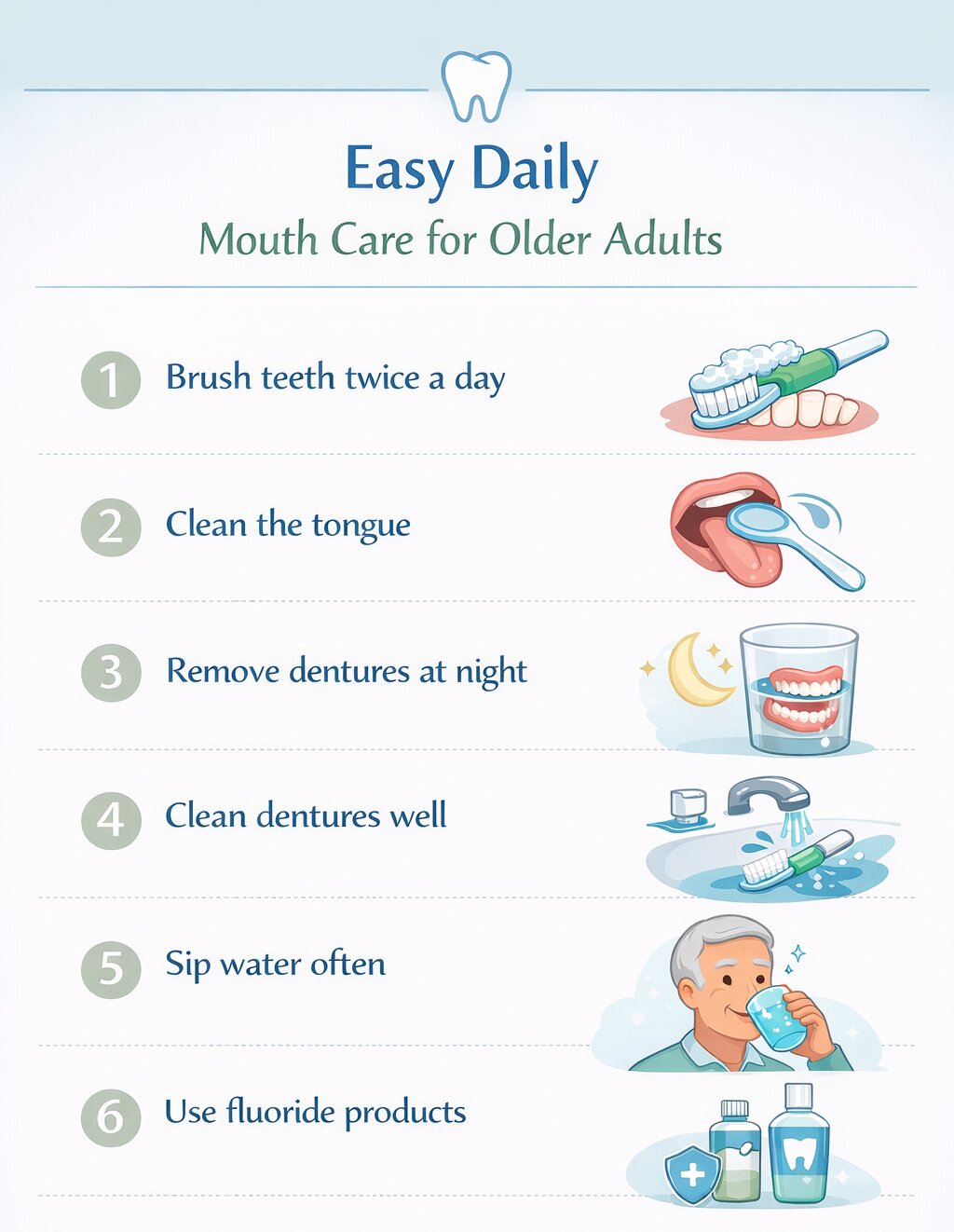
Brush twice a day with a soft brush
Clean the tongue once a day
Remove and clean dentures each night
Sip water often if dry mouth is a problem
Use fluoride products if decay risk is high
Look at the whole routine
I have found that asking simple questions can reveal underlying issues:
Is brushing uncomfortable.
Is there support available at home.
Are dentures worn continuously.
Does the patient feel dryness in the mouth.
Are other hygiene activities also becoming difficult.
These answers tell you whether the issue is just oral care or part of a bigger hygiene decline.
Watch for dry mouth and act early
Dry mouth is not a small complaint. It can turn into rapid root decay before anyone sees what is happening.
Dental teams can suggest:
More water throughout the day
Alcohol-free mouth rinse
Products that help with saliva
Sugar-free gum or lozenges (when safe)
Extra fluoride care
A useful DentalTown read on this topic is Senior Smiles: Oral Health Challenges and Solutions for Aging Adults, which gives a clear look at dry mouth, gum disease, and denture care in later life.
Meet patients where they are
Some older adults cannot get to the office with ease. Others live in care homes and go months without proper dental care. That gap can turn a mild hygiene problem into a serious one.
The DentalTown article Mobile Treatment of Geriatric Patients is a strong reminder that access matters just as much as advice.
Tips dental professionals can share with families
Here are a few plain tips that help right away:
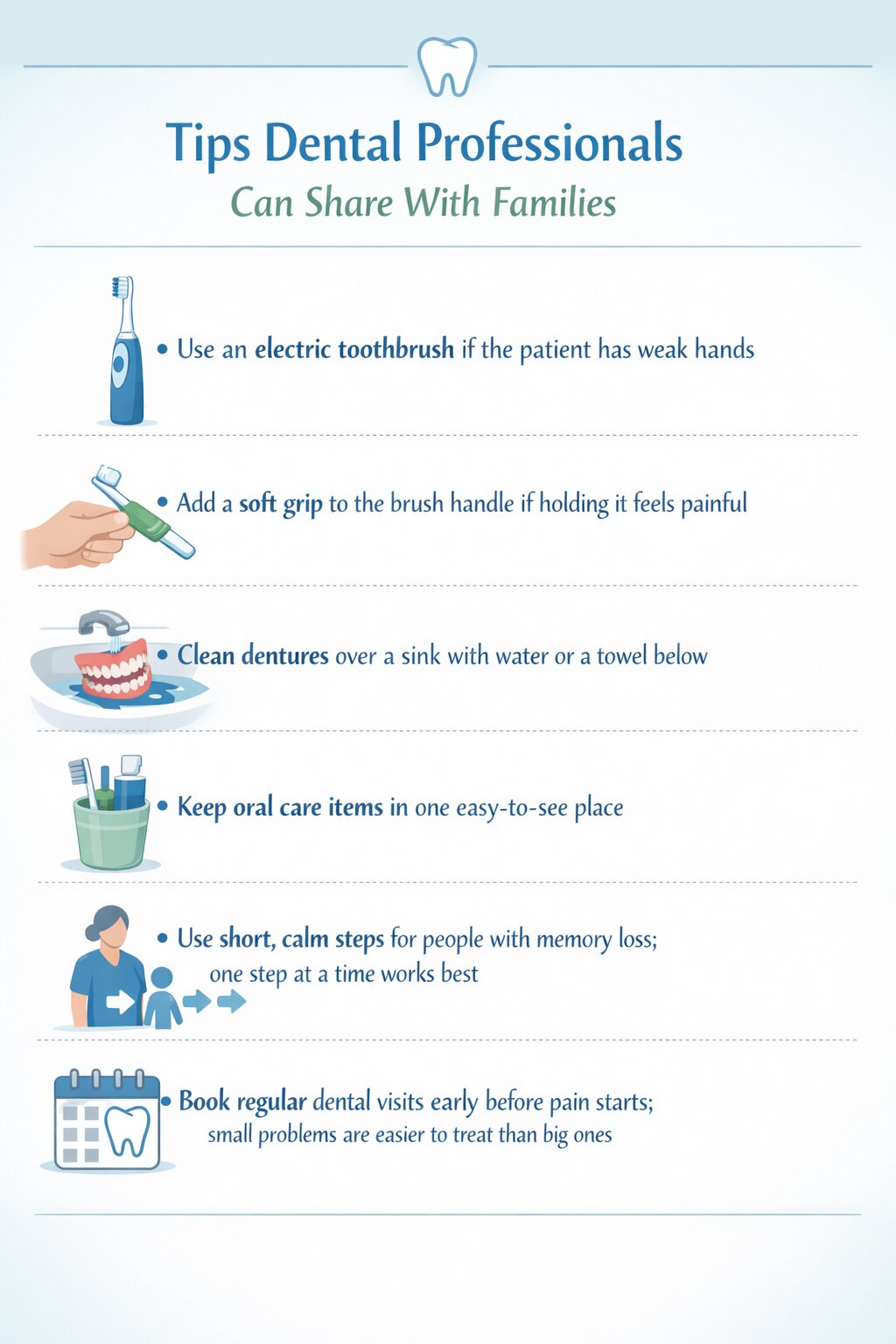
Based on my experience, small adjustments can make a significant difference:
Using an electric toothbrush for better plaque removal
Improving grip with modified handles
Cleaning dentures carefully to prevent damage
Keeping oral care tools visible and accessible
Breaking routines into simple steps
Scheduling regular dental visits before complications develop
The Bigger Picture
In my clinical experience, hygiene challenges in elderly patients often indicate more than just oral care issues. They can point to physical limitations, cognitive decline, or gaps in daily support.
This is where the role of dental professionals becomes more comprehensive. By identifying early signs, simplifying care, and supporting caregivers, we can help patients maintain comfort, health, and dignity.
From what I have seen, this approach not only improves oral health but also has a meaningful impact on overall quality of life.
About the Author
Dr. Muhammad Waqas, BDS, is a dedicated dental practitioner focused on delivering high-quality, patient-centered care. He emphasizes preventive dentistry, early diagnosis, and practical treatment approaches to support long-term oral health, especially in patients with complex care needs.