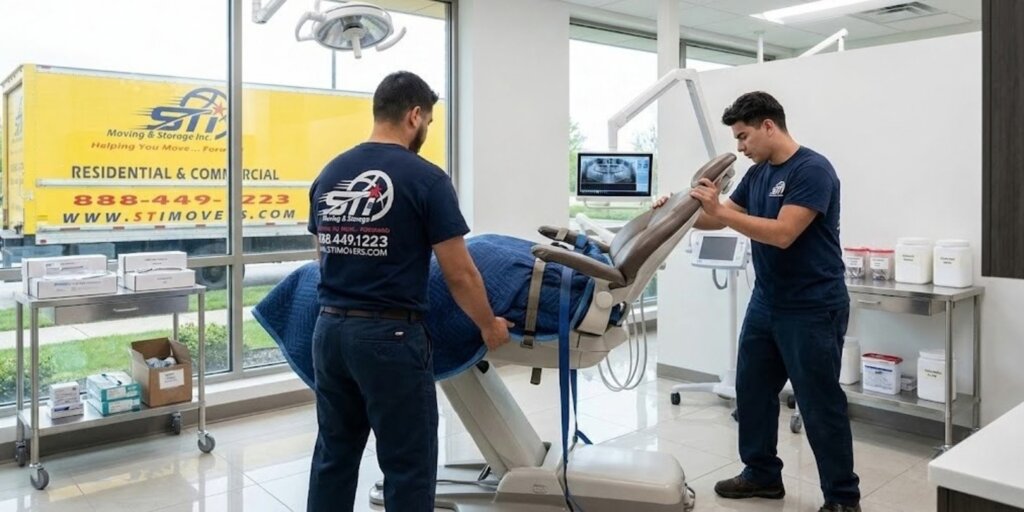
I’ve been part of two dental office relocations.
Both were necessary.
Both were stressful.
And both completely changed how I think about moving a practice.
Relocating a dental office isn’t like moving a small business or even another healthcare clinic. Dentistry depends heavily on specialized equipment, precise layouts and patient trust. You’re not just packing up furniture — you’re relocating operatories, sterilization areas, imaging systems, compressors and years of patient relationships.
If the move isn’t handled correctly, the damage goes beyond scratched walls. It can affect revenue, reputation and team morale.
Here’s what I’ve learned about making a dental practice relocation smoother and far less overwhelming.
Start Planning 12 Months Before You Move
Most dentists underestimate how long relocation takes.
You think six months is enough. It usually isn’t.
Finding the right space alone can take several months. Then you’re dealing with lease negotiations, city permits, construction timelines, inspections and equipment coordination. Dental offices also require plumbing, electrical, suction lines and proper imaging room shielding — all of which take planning.
Start early so you’re not forced into “dark days” — that uncomfortable gap where your current lease ends but your new office isn’t ready.
Every day you’re closed means lost production and stressed staff.
Planning early gives you control.
Choose Movers Who Understand Dental Equipment
This part is critical.
Dental chairs, X-ray systems, sterilizers, compressors and cabinetry aren’t standard office items. They’re sensitive, expensive and often customized to your setup.
During one move, we worked with a general moving company. They were professional — but they didn’t understand dental equipment. That led to delays and extra costs we could have avoided.
Instead, look for experienced medical equipment movers who have handled dental practices before. They understand how to disconnect and protect imaging systems, transport suction units safely and coordinate reinstallation without damaging internal components.
They also know the insurance requirements involved in moving high-value healthcare equipment.
When it comes to dentistry, this expertise isn’t optional. It’s essential.
Design Your New Dental Layout Before Moving Day
One of the smartest decisions we made during our second relocation was mapping everything out in advance.
Before anything was packed, we created a detailed floor plan. We measured operatories, cabinetry, sterilization flow, front desk placement and waiting room layout.
We printed multiple copies and shared them with:
1.Contractors
2.IT specialists
3.Equipment installers
4.The moving team
This prevented chaos on moving day.
Instead of standing around deciding where chairs should go, everyone had clear instructions. It also allowed our installers and medical equipment movers to identify potential issues early — like electrical placement or plumbing access — before equipment arrived.
Dental offices depend heavily on workflow. Proper layout impacts efficiency, patient comfort and staff productivity.
Don’t leave it to last-minute decisions.
Communicate With Patients Well in Advance
Patient retention during a dental relocation is fragile.
Some patients will use your move as a reason to switch providers — especially if your new location is farther away.
You can’t prevent every loss. But you can reduce it.
Start notifying patients two to three months before the move.
Send emails and printed letters. Place signs in your waiting room. Have your team mention it during appointments. Update your voicemail and website. Fix your Google Business listing.
Nothing damages trust like a patient showing up at your old office and finding it empty.
Also, highlight the positives of your new space. New dental chairs. Updated imaging systems. Improved parking. More comfort.
Position the move as an upgrade — because ideally, that’s exactly what it is.
Reduce Downtime with Smart Scheduling
Every closed day affects production.
Many dental practices schedule their move over a long weekend:
1.Close Thursday afternoon
2.Move Thursday evening through Sunday
3.Reopen Monday
This limits downtime to one or two business days instead of an entire week.
Coordinate carefully with installers and medical equipment movers so essential equipment is disconnected at the right time and reinstalled quickly.
Your IT systems must be ready on day one. Test phones, patient software and digital imaging systems before reopening.
If possible, keep your schedule lighter for the first few days. This gives your team breathing room to solve small issues without overwhelming stress.
Don’t Overlook Licensing and Compliance Updates
Relocating a dental practice involves more than physical movement.
You’ll need to:
1.Notify your state dental board
2.Update malpractice insurance
3.Inform suppliers and labs
.Update insurance networks
5.Change your business address with tax agencies
6.Order new prescription pads and printed materials
Create a detailed checklist and move through it carefully.
Missing something small can cause billing delays or compliance issues later.
Involve Your Dental Team From the Beginning
Your team will feel the impact of this move just as much as you will.
Tell them early. Be transparent about timelines and expectations.
Delegate responsibilities:
.Someone oversees patient communications
.Someone tracks supply inventory
.Someone coordinates vendor updates
Your hygienists understand operatory workflow better than anyone. Your assistants know which tools are used constantly. Your office manager understands supplier relationships.
Involve them in decisions. When your staff feels included, transitions are smoother.
Budget More Than You Expect
Every dentist I know who has relocated says the same thing:
“It cost more than I thought.”
Renovations expand. Technology upgrades become necessary. Small installation details turn into larger invoices.
Add a 20–30% contingency fund to your projected budget. This protects you from rushed decisions when unexpected expenses appear.
Also evaluate your new monthly overhead. A larger or more modern location may increase rent and utility costs.
Make sure your production projections support it.
Use the Move as an Upgrade Opportunity
Relocating a dental office isn’t just about moving. It’s a reset.
This is your chance to upgrade outdated X-ray systems, replace older chairs, modernize sterilization areas, or transition to fully digital records.
If equipment is already due for replacement, it may make more sense to upgrade instead of paying to move aging systems.
When coordinated properly with experienced medical equipment movers, installations can be handled efficiently and safely.
Think long-term. Design for growth. Improve workflow. Enhance patient comfort.
Don’t recreate old limitations in a new building.
The Bottom Line
Relocating a dental practice is one of the most stressful projects you’ll manage as a dentist.
But it doesn’t have to feel chaotic.
.Start early.
.Hire specialists.
.Communicate clearly.
.Budget wisely.
.Involve your team.
Most importantly, remember that the disruption is temporary.
A better location can mean improved workflow, modern equipment and a stronger patient experience.
I’ve seen dental practices come out stronger on the other side of relocation.
With the right planning — and the right support — yours can too.