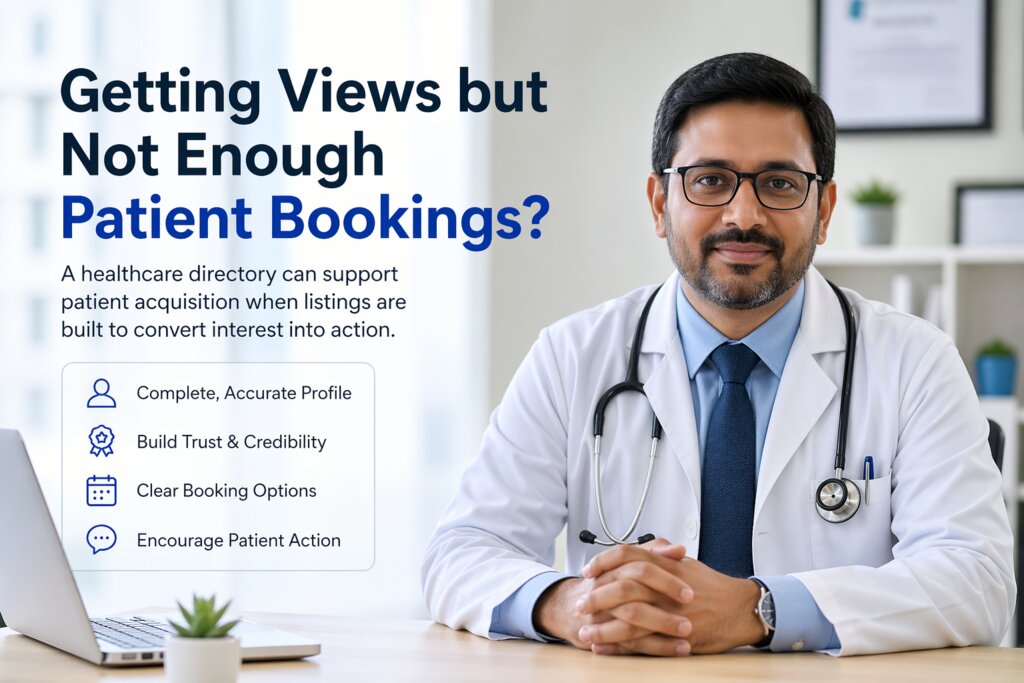
A few years ago, I noticed something frustrating in one of the practices I was helping. Website traffic was increasing, Google Business Profile views looked healthy, and social media engagement seemed respectable. On paper, everything suggested that new patient bookings should be climbing.
They weren't.The practice was getting attention but not enough appointments.
At first, we assumed the problem was traffic. Maybe we needed more SEO, more ads, or more content. But after digging deeper, we realized the real issue wasn't visibility. It was conversion.
Patients were finding the practice, but they weren't taking the next step.
That experience completely changed how I think about dental directory listings and patient acquisition.
Why Visibility Alone Doesn't Grow a Dental Practice
Many dentists assume that if enough people see the practice online, bookings will naturally follow.
In reality, modern patients rarely make decisions that way.
Most people compare multiple providers before they contact anyone. They check Google, maps, reviews, websites, social profiles, and directory listings. Every touchpoint becomes part of the decision-making process.
If a potential patient finds incomplete information, outdated details, unclear services, or no obvious next step, they simply move on.
I've watched this happen repeatedly.
A practice can have excellent clinical outcomes and a strong reputation locally, but if its online presence creates uncertainty, patients often choose the office that feels easier to understand.
What Patients Are Really Looking For
When people search for a dentist, they are not only looking for treatment.
They're looking for reassurance.
Before booking, most patients silently ask themselves:
Does this practice look professional?
Can they help with my specific problem?
Is the location convenient?
How do I contact them?
Can I trust them?
A dental directory listing can answer those questions immediately—or leave them unanswered.
That small difference often determines whether someone books or keeps searching.
The Conversion Problem Most Dental Practices Miss
One thing I've learned from working with practices is that patient acquisition is usually lost through small points of friction.
A listing might generate hundreds of views, but if patients can't quickly find:
Services offered
Contact information
Location details
Appointment options
Practice specialties
then those views rarely become appointments.
The strongest dental directory profiles are surprisingly simple.
They clearly explain what the practice does, who it serves, and how patients can take the next step.
Nothing complicated.
Just clarity.
Why New Dental Practices Feel This Most
Established practices often benefit from referrals and long-standing community relationships.
New practices don't have that luxury.
When a startup dental clinic opens, online discovery becomes one of the fastest ways to build patient momentum.
I've seen excellent new practices struggle simply because patients couldn't easily find reliable information online.
A well-optimized dental directory profile can help bridge that gap by providing visibility exactly when patients are actively comparing providers.
For new practices especially, directories should not be treated as passive citations. They should be treated as patient acquisition assets.
A Good Dental Directory Listing Reduces Friction at the Moment of Decision
One reason directory profiles underperform is that they often create unnecessary friction. A patient may find the clinic, but then encounter vague service descriptions, missing location details, or no obvious next step. Each additional point of uncertainty increases the chance that the patient leaves the page and continues searching.
Effective profiles reduce that friction. They make it easy to understand what the clinic offers, who it serves, and how to connect. That does not require aggressive sales language. In fact, the strongest listings often feel simple, direct, and useful. They anticipate the reader’s most immediate questions and answer them without forcing the reader to work for the information.
For clinics assessing how to improve digital discovery, reviewing platforms such as a healthcare directory can help clarify how searchable listings support both visibility and patient action. In this context, the listing is not the end point. It is a bridge between search behavior and appointment intent.
Trust Signals Matter More Than Ever
Patients are increasingly cautious when choosing healthcare providers.
That's understandable.
Most people don't know how to evaluate clinical quality, so they look for indirect signals instead.
Clear service descriptions.
Professional branding.
Consistent contact information.
Up-to-date practice details.
These elements may seem minor, but together they influence trust.
I've found that improving these trust signals often produces better results than simply chasing more traffic.
That trust-building role reflects a broader shift in healthcare access. Resources from the Canadian Institute for Health Information and Statistics Canada continue to highlight how healthcare access, patient needs, and service navigation remain central issues across Canada. In that environment, discoverability and clarity are not separate from patient care. They are part of how patients find the care they need in the first place.
What Changed Our Results
When we stopped focusing only on visibility and started improving how listings communicated value, bookings improved.
Not overnight.
But steadily.
The biggest improvements came from:
Updating service descriptions
Making contact information consistent everywhere
Clarifying specialties
Improving patient-facing messaging
Removing unnecessary friction from booking paths
The lesson was simple.
Patients don't book because they found your practice.
They book because they feel confident choosing it.
Final Thoughts
One thing I've learned from dental practice growth is that more views do not automatically create more patients.
Visibility creates opportunity.
Conversion creates appointments.
A strong dental directory listing helps patients understand who you are, what you offer, and why they should trust you. When that information is clear and accessible, directories become more than online listings. They become practical tools for new patient acquisition.
For practice owners looking to strengthen growth, it may also be worth exploring related topics such as How Independent Practices Can Finally Choose an EHR That Feels Built for Them, Why Dental Practices Are Paying More Attention to Patient Comfort Through Interior Design, and Why More People Are Choosing Laser Dentistry for Their Smile Transformation. Each highlights a different part of the modern patient experience that increasingly influences how patients choose a dental practice.
Additional Resources
For more guidance on growth strategy and patient acquisition, explore how to get patients for a new clinic.