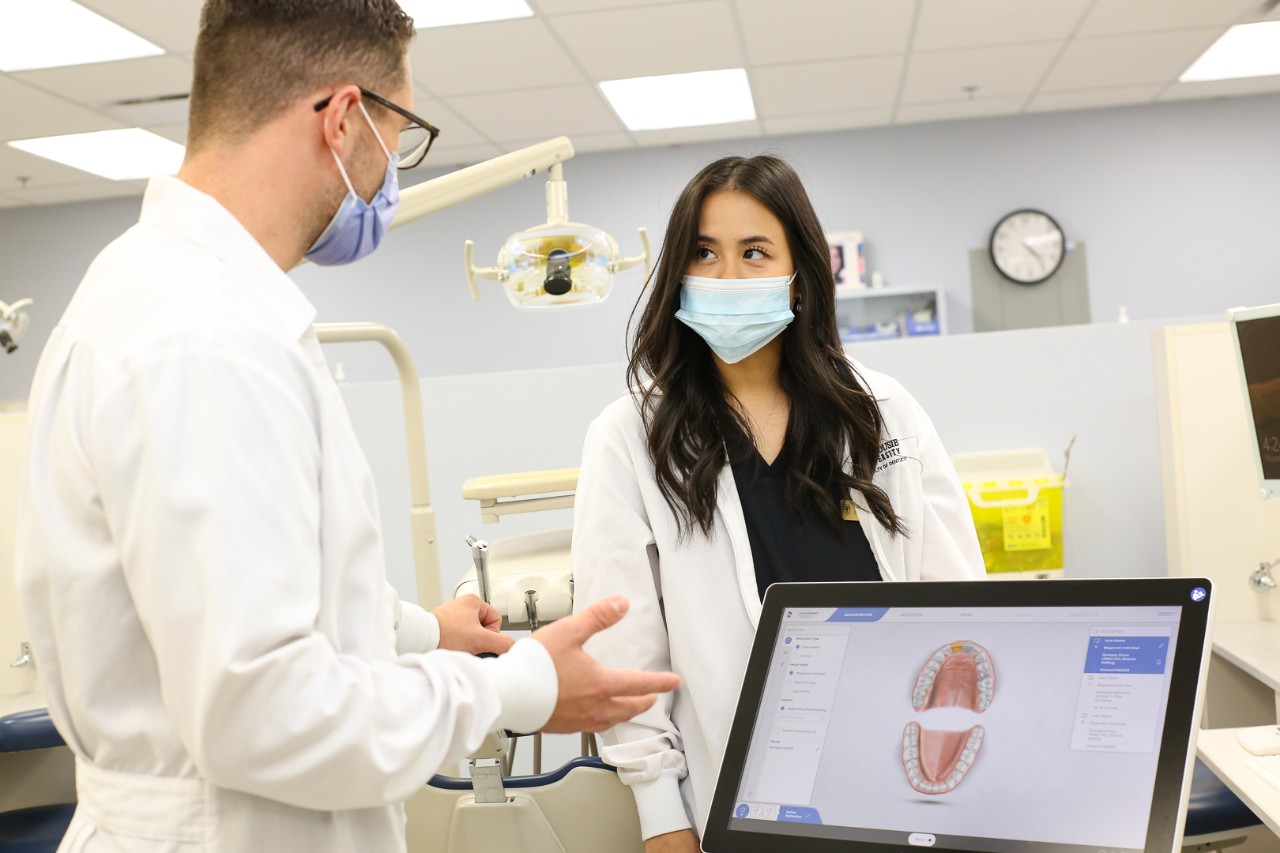
Most people don't think of dentistry when they hear "digital health innovation." They think of hospital systems, wearable devices, telehealth platforms. The flashy stuff.
But here's what's actually happening: dental technology companies are outpacing much of the broader healthcare industry when it comes to adopting digital tools, shipping connected products, and getting real clinical results from software. They're doing it faster, with fewer regulatory headaches, and with a clarity of purpose that larger healthcare verticals have been struggling to match for years.
If you're running a dental technology company or leading product strategy at one, you're sitting on an advantage most people in digital health don't fully appreciate yet. This article breaks down why that advantage exists, how the smartest dental tech companies are using it, and what you need to do to stay ahead of the curve.
The Dental Industry's Quiet Digital Transformation
Dentistry has always been a bit of an outlier in healthcare. Most dental practices are small, independently owned businesses. They don't operate inside massive hospital networks. They aren't tangled up in the same legacy IT infrastructure that slows down innovation at large health systems.
That independence turns out to be a huge asset when it comes to technology adoption.
Digital imaging is now standard in most practices. CAD/CAM systems for same-day restorations have gone from niche to mainstream. Intraoral scanners, once considered a luxury, are becoming baseline equipment. Digital impressions are steadily replacing the goopy molds patients have dreaded for decades.
But the real story isn't about individual gadgets. It's about how dental technology companies are building connected ecosystems that tie hardware, software, and patient data into cohesive platforms. Think about what companies like Align Technology did with Invisalign: they didn't just make clear aligners. They built a digital workflow that starts with a 3D scan, runs through AI-assisted treatment planning, and tracks progress through a patient-facing app. That's a full-stack digital health product disguised as orthodontics.
Compare this to what's happening in broader medtech. Hospital-grade medical devices often take 5 to 7 years to move from concept to FDA clearance. They require integration with EHR systems that were designed in the early 2000s. They face procurement cycles that can stretch 18 months or longer.
Dental tech companies? Many are shipping meaningful product updates every quarter.
What's Actually Driving This Advantage
So why are dental technology companies moving faster than their counterparts in hospital-focused medtech? It comes down to a few structural advantages that compound on each other.
Smaller regulatory footprint, faster iteration. Most dental software products fall under FDA Class I or Class II designations. Some qualify for the 510(k) pathway, which is significantly faster than the premarket approval (PMA) process required for higher-risk devices. This doesn't mean compliance is easy; it means the path is more predictable. Companies that partner with experienced medical device software development services can navigate these requirements without the multi-year timelines that plague more complex device categories.
Direct access to the end user. In most of healthcare, there are layers between the technology maker and the person using it. Procurement departments, IT committees, group purchasing organizations. In dentistry, the decision-maker is often the dentist who owns the practice. They see a product demo at a conference, evaluate the ROI, and make a purchasing decision within weeks. That short feedback loop means dental tech companies can iterate based on real user input much faster than companies selling into hospital systems.
A workflow that's already going digital. Dental practices have been digitizing for over a decade. Digital X-rays, practice management software, electronic claims submission. The foundation is already in place. When a dental tech company introduces a new connected device or software platform, it's plugging into an ecosystem that's ready for it, not fighting against paper-based processes and outdated infrastructure.
Financial model that rewards innovation. Most dental practices operate as small businesses with clear profit-and-loss visibility. When a new piece of technology can demonstrably save time, reduce material costs, or attract more patients, the ROI calculation is straightforward. A dentist investing $150,000 in a CEREC milling system can calculate exactly how many same-day crowns they need to produce to break even. That kind of clarity drives adoption.
Where Smart Dental Tech Companies Are Investing Right Now
The dental technology companies pulling ahead aren't just digitizing existing workflows. They're building entirely new categories of products. Here's where the serious investment is going:
1.AI-powered diagnostics and treatment planning. Companies like Overjet and Pearl are using computer vision to analyze dental X-rays, flagging cavities, bone loss, and other conditions with accuracy that matches or exceeds experienced radiologists. For dental practices, this means faster, more consistent diagnoses and better documentation for insurance claims. For the companies building these tools, it means recurring SaaS revenue tied directly to clinical outcomes.
2.Connected device ecosystems. The trend is moving away from standalone devices toward platforms. An intraoral scanner that talks to your practice management software, feeds data into a cloud-based treatment planning tool, and connects to a lab's manufacturing workflow. The companies building these integrated platforms are creating switching costs that lock in customers for years.
3.Patient engagement and remote monitoring. Clear aligner companies pioneered this with apps that let patients track treatment progress and communicate with providers. Now that model is expanding into general dentistry. Post-operative monitoring, appointment reminders tied to treatment plans, and even teledentistry consultations are all becoming standard features rather than standalone products.
4.3D printing for chairside manufacturing. The ability to scan, design, and print dental restorations, surgical guides, and even dentures in a single appointment is transforming practice economics. Companies like SprintRay and Formlabs Dental are making these workflows accessible to practices that couldn't have afforded them three years ago.
5.Data analytics for practice optimization. This is the less glamorous but potentially most valuable category. Software that helps practice owners understand their case acceptance rates, identify revenue leakage, optimize scheduling, and benchmark against peers. It's the kind of tool that doesn't make headlines but drives real business results.
The Compliance Question: Simpler Doesn't Mean Simple
Here's where some dental tech companies stumble. The lower regulatory barrier in dentistry compared to, say, cardiac devices can create a false sense of security. FDA compliance for dental software still requires rigorous quality management systems, documented development processes, and ongoing post-market surveillance.
The companies getting this right treat compliance as a product feature, not a bureaucratic hurdle. They build quality management into their development process from day one rather than bolting it on before submission.
A few things dental tech companies need to get right on compliance:
.Software as a Medical Device (SaMD) classification. If your software makes clinical recommendations or influences treatment decisions, the FDA likely considers it a medical device. The classification level depends on the risk to patients. An AI tool that flags potential cavities on an X-ray faces different requirements than a practice scheduling app.
.Cybersecurity documentation. The FDA's 2023 guidance on cybersecurity for medical devices applies to dental software too. You need a software bill of materials (SBOM), a plan for addressing vulnerabilities, and evidence that you've considered cybersecurity throughout the product lifecycle.
.Interoperability standards. As dental software increasingly connects to broader healthcare systems, standards like HL7 FHIR become relevant. Practices that participate in health information exchanges or share data with medical providers need software that speaks these protocols.
Ignoring any of these can delay your product launch by months or create liability exposure that no amount of market traction can offset.
What Dental Tech Can Teach the Rest of Healthcare
The broader digital health industry has a lot to learn from what's happening in dentistry. Not because dental technology is inherently more sophisticated, but because the market structure forces discipline that larger healthcare verticals often lack.
Here are the key lessons:
1.Solve a specific workflow problem, not a general concept. The most successful dental tech products target a concrete pain point: same-day crowns eliminate the second appointment. AI diagnostics reduce the time spent reviewing X-rays. Clear aligner platforms remove the need for physical impressions. Every feature maps to a measurable improvement in the dentist's day. Compare that to the vague promises many digital health startups make about "transforming care delivery" or "improving outcomes."
2.Make ROI obvious and fast. Dental practitioners think like small business owners because they are small business owners. They want to know: how much does this cost, how much time or money will it save me, and how quickly will I see the return? Digital health companies selling into hospitals could learn a lot from this directness.
3.Build for the user, not the buyer. In hospital settings, the person who buys the software is rarely the person who uses it daily. That disconnect leads to products that check procurement boxes but frustrate clinicians. In dentistry, the buyer and the user are usually the same person. That alignment produces better products.
4.Ship fast, improve continuously. Dental tech companies that release quarterly updates based on user feedback consistently outperform those that try to build the perfect product before launch. The iterative approach works because the regulatory pathway supports it, and the direct relationship with users provides immediate signal on what's working.
How to Position Your Dental Tech Company for What's Coming
The window of advantage won't stay open forever. As larger healthcare technology companies notice the dental market's growth (the global dental technology market is projected to reach $10.5 billion by 2028, according to Grand View Research), competition will increase.
Here's how to stay ahead:
.Invest in data infrastructure now. The dental tech companies that will dominate the next decade are the ones building proprietary datasets today. Every scan, every treatment outcome, every patient interaction is training data for future AI products. If you're not capturing and structuring this data, you're leaving your biggest competitive asset on the table.
.Build platform, not just product. Standalone devices and single-purpose software are becoming commodities. The defensible position is an integrated platform that connects multiple touchpoints in the dental workflow. Think about how your product can become the hub that other tools connect to, not just another spoke.
.Take cybersecurity seriously before you're forced to. The regulatory landscape around medical device cybersecurity is tightening. Companies that proactively invest in security architecture, vulnerability management, and compliance documentation will have a significant advantage over those scrambling to catch up after an FDA warning letter.
.Partner strategically for clinical validation. The most credible dental tech companies are the ones publishing clinical evidence. Partner with dental schools, run pilot programs with multi-location practices, and build a body of evidence that your technology delivers real clinical and economic outcomes.
.Hire (or partner with) people who understand both dentistry and software. The biggest bottleneck in dental tech isn't technology. It's finding people who can bridge the gap between clinical workflows and software product development. Whether you build that expertise internally or work with specialized development partners, this cross-functional knowledge is what separates products that get adopted from products that collect dust.
The Bottom Line
Dental technology companies have a structural advantage in digital health that most of the industry hasn't fully recognized. Shorter regulatory cycles, direct access to decision-makers, an already-digital workflow foundation, and clear ROI visibility create conditions for faster innovation than almost any other healthcare vertical.
But advantage alone doesn't guarantee success. The companies that will win are the ones treating software as a core product competency, building integrated platforms instead of isolated tools, and taking compliance seriously from the start.
The digital health race isn't being won by whoever has the most funding or the flashiest pitch deck. It's being won by companies that ship real products, solve specific problems, and earn trust through clinical results. Right now, dental tech is doing exactly that.