Getting braces is exciting for many people because it means progress toward a healthier and straighter smile. But after the first few days, reality starts to sink in. Brushing takes longer, food gets trapped more easily, and flossing suddenly feels frustrating. Many patients who flossed regularly before braces begin skipping it simply because the process feels complicated.
The problem is that braces create more small spaces where plaque and food particles can hide. If those areas are not cleaned properly, it can lead to swollen gums, bad breath, stains on teeth, and even cavities during treatment.
That is why orthodontic care is not only about straightening teeth. A qualified orthodontist is trained to monitor how braces affect daily oral hygiene and guide patients toward cleaning habits that protect both tooth alignment and long-term dental health.
Key Takeaways
a) Flossing with braces is harder, but still very important.
b) Plaque builds up faster around brackets and wires.
c) Skipping flossing may lead to gum problems and tooth stains.
d) Special flossing tools can make cleaning easier.
e) Consistent cleaning supports better orthodontic results.
Why Flossing Feels Difficult with Braces
Traditional flossing becomes more challenging because braces place wires between the teeth. Instead of sliding floss normally, patients must work around brackets and arch wires carefully. At first, the process may seem slow and uncomfortable. Some people avoid flossing because they worry about damaging their braces. Others simply become impatient after struggling with tangled floss every night.
However, avoiding flossing usually creates bigger problems later. Food debris trapped around braces stays inside the mouth for hours if not removed properly.
What Happens When You Skip Flossing
Plaque is a sticky layer of bacteria that constantly forms on teeth. When braces are added, plaque collects more easily around brackets and near the gumline.
Without flossing, this build-up may cause:
a) Red or swollen gums
b) Bleeding during brushing
c) Tooth discoloration
d) Persistent bad breath
e) Early cavities
f) White spots on enamel
White spot lesions are especially common in orthodontic patients with poor oral hygiene. These marks may remain visible even after braces are removed.
In severe cases, gum inflammation can slow down orthodontic progress because healthy gums are important for safe tooth movement.
The Biggest Mistake Most Patients Make
Many people think brushing alone is enough. Unfortunately, toothbrush bristles cannot fully clean tight spaces between teeth. Braces increase the number of areas where bacteria can hide. Even excellent brushing leaves behind particles between teeth if flossing is skipped. Another common mistake is rushing through oral care. Some patients floss only once every few days instead of making it part of their daily routine. Consistency matters more than perfection.
Helpful Tools That Make Flossing Easier
The good news is that flossing with braces becomes much easier when using the right tools. Patients no longer need to rely only on traditional floss methods.
Floss Threaders
These small plastic tools help guide floss underneath orthodontic wires. They work similarly to threading a needle.
Orthodontic Floss
Some floss products are specially designed for braces. They often include stiff ends that slide under wires more easily.
Water Flossers
Water flossers use pressurized water to clean around braces and between teeth. Many patients find them faster and more comfortable than string floss.
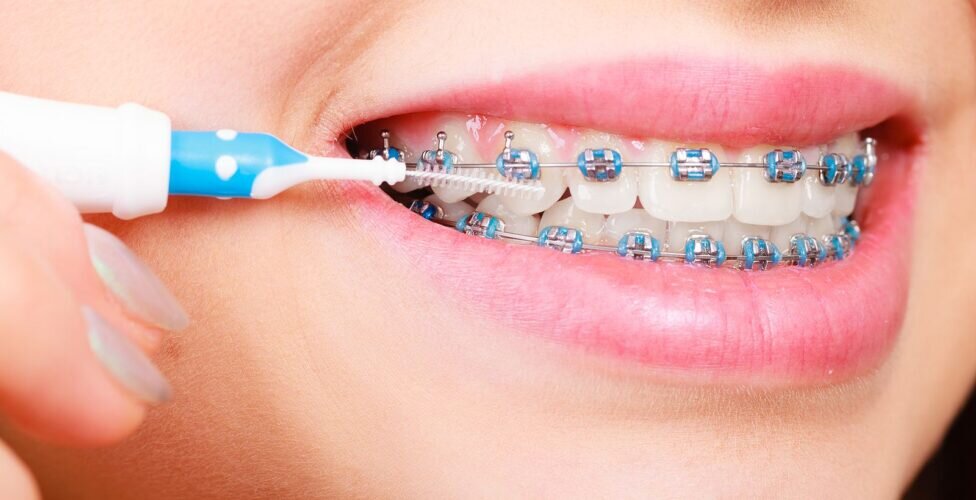
Interdental Brushes
These tiny brushes fit between brackets and wires to remove trapped debris in difficult areas. Using a combination of these tools often gives the best results.
Building a Better Cleaning Routine
A successful braces-cleaning routine does not need to be complicated. The key is creating habits that are realistic and easy to maintain.
Most orthodontic patients benefit from:
a) Brushing after meals when possible
b) Flossing once daily
c) Using fluoride toothpaste
d) Rinsing after sugary snacks
e) Cleaning carefully around brackets
Night-time flossing is especially important because bacteria stay active while sleeping. Some patients also benefit from carrying travel-sized oral hygiene products during school or work hours.
Why Gum Health Matters During Orthodontic Treatment
Healthy gums help support tooth movement during braces treatment. Inflamed gums can become tender, swollen, and sensitive. When gums are irritated, cleaning may feel uncomfortable, causing patients to avoid flossing even more. This creates a cycle that becomes harder to control over time.
Keeping gums healthy allows orthodontic adjustments to work more effectively and comfortably.
Staying Motivated During Treatment
Orthodontic treatment can last many months or even years. It is normal for patients to lose motivation occasionally. One helpful reminder is that braces are temporary, but dental damage can last much longer. Spending a few extra minutes flossing each day can protect the final results of treatment.
Tracking progress may also help. Some patients notice fresher breath, healthier gums, and cleaner teeth within a few weeks of improving their flossing habits.
Small Habits Create Big Results
Flossing with braces may never feel completely effortless, but it becomes easier with practice and consistency. Most patients who struggle at first eventually develop a routine that works well for them. Orthodontic treatment is not only about straight teeth. It is also about maintaining healthy enamel, gums, and overall oral hygiene throughout the process. By using the right tools and staying consistent, patients can protect their smile while making sure their braces deliver the best possible results in the long run.