What causes old people to smell? It may sound blunt, but it reflects a real concern many families quietly face. The issue is rarely just age. Instead, it’s usually a combination of dry skin, changes in sweat, underlying health conditions, reduced mobility, and declining oral hygiene.
Among these, oral health often plays a bigger role than people realize.
When older adults struggle with brushing, denture care, dry mouth, or gum disease, the mouth can quickly become a source of odor, discomfort, and even systemic health problems. Dental professionals are uniquely positioned to identify these early signs and guide both patients and caregivers toward practical solutions.
If you want to better understand the root causes behind this issue, this guide on what causes old people to smell and how to manage it explains the connection between hygiene, health, and daily care challenges in older adults.
Why Hygiene Becomes Difficult With Age
Most older adults don’t neglect hygiene intentionally—it simply becomes harder over time.
Common barriers include:
Reduced hand strength or arthritis
Vision impairment
Cognitive decline (e.g., dementia)
Fatigue or limited mobility
Emotional factors like embarrassment or withdrawal
When these challenges combine with oral issues such as dry mouth, tooth pain, or ill-fitting dentures, daily hygiene routines can quickly break down.
Common Oral Hygiene Issues in Older Adults
1. Dry Mouth (Xerostomia)
Dry mouth is one of the most widespread issues in elderly patients, often caused by medications for:
Blood pressure
Depression or anxiety
Pain management
Bladder conditions
Reduced saliva increases the risk of:
Tooth decay
Mouth sores
Bad breath
Difficulty chewing and speaking
For a deeper clinical perspective, this Dentaltown article on oral health challenges and solutions for aging adults explains how dry mouth and gum disease affect seniors and what dental teams can do.
2. Difficulty Brushing and Flossing
Even when patients understand oral care, physical limitations can prevent proper execution. Conditions like arthritis make brushing painful, leading to plaque buildup, gum disease, and halitosis.
3. Denture Neglect
Improper denture care is common and includes:
Sleeping with dentures
Inadequate cleaning
Wearing ill-fitting appliances
This can lead to:
Oral infections (like candidiasis)
Sore spots
Bad odor
Nutritional issues due to poor chewing ability
4. Emotional Withdrawal and Hygiene Decline
Hygiene issues often have a psychological impact. Patients may:
Avoid social interaction
Feel embarrassed
Lose confidence
This creates a cycle where poor hygiene leads to isolation, which further worsens self-care.
How Dental Professionals Can Help
Keep Instructions Simple
Avoid overwhelming patients. Focus on a few key habits:
Brush twice daily with a soft-bristled brush
Clean the tongue once a day
Remove and clean dentures nightly
Stay hydrated
Use fluoride products when needed
Assess the Bigger Picture
Ask simple but revealing questions:
Is brushing painful?
Is there caregiver support at home?
Are dentures worn overnight?
Is dry mouth a frequent complaint?
These insights help determine whether the issue is purely dental or part of a broader care concern.
Address Dry Mouth Early
Early intervention can prevent rapid decay. Recommendations include:
Frequent water intake
Alcohol-free mouth rinses
Saliva substitutes or stimulants
Sugar-free gum (if appropriate)
High-fluoride treatments
Improve Access to Care
Many elderly patients face barriers in reaching clinics. Solutions may include:
Mobile dental services
Coordination with caregivers
Flexible scheduling
Access to care is critical, as highlighted in this Dentaltown resource on mobile treatment for geriatric dental patients, which explains how bringing care to patients can prevent small hygiene issues from becoming serious conditions.
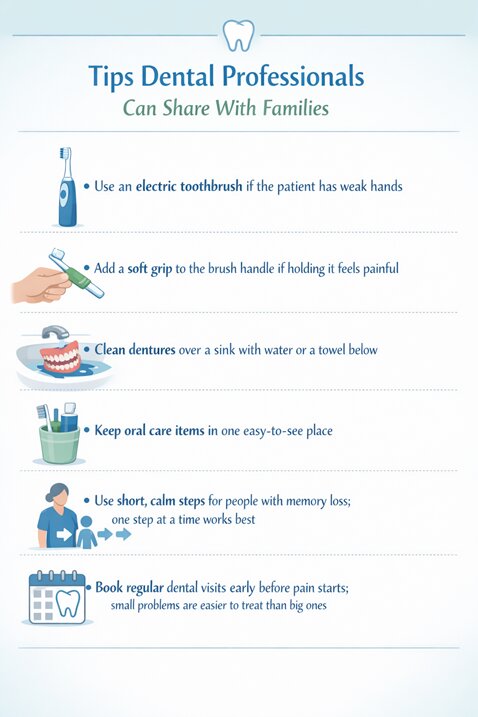
Practical Tips for Families and Caregivers
Use an electric toothbrush for better control
Add grip support to toothbrush handles
Clean dentures over a towel or water-filled sink
Keep oral care tools visible and organized
Break routines into simple, step-by-step actions
Schedule regular dental visits before problems worsen
The Bigger Picture
Hygiene challenges in older adults go beyond appearance or odor. They can signal:
Underlying pain
Reduced independence
Cognitive decline
Limited access to care
Dental professionals play a critical role not just in treatment, but in early detection, education, and support. By simplifying care routines and involving caregivers, they help elderly patients maintain dignity, comfort, and overall health.