A tooth can hurt for many reasons, and the source is not always obvious from looking inside the mouth. A patient may point to one tooth, yet the actual problem can involve a neighboring tooth, the surrounding bone, or an infection that has developed below the gumline. That is where dental imaging can provide information that a visual examination cannot.
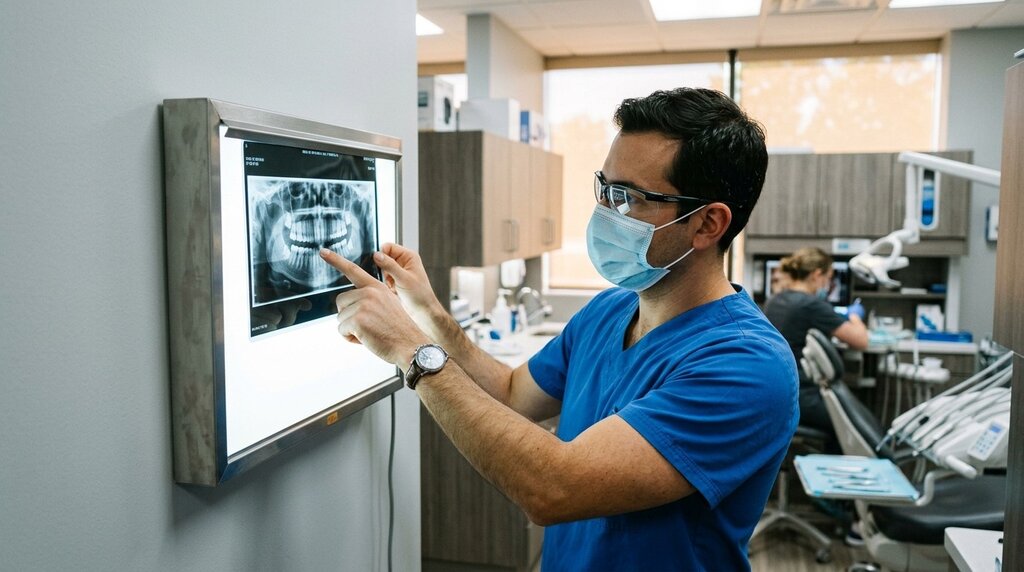
A dentist examining an x-ray
So, can X-rays reveal the cause of dental pain? Often, yes. X-rays can help identify problems that are hidden from view, including decay, bone changes, dental infections, and certain types of trauma. However, an X-ray is not a diagnosis by itself. The image needs to be considered alongside the patient's symptoms, dental history, and clinical examination. The American Dental Association recommends that dental radiographs be ordered based on individual clinical needs rather than simply as routine tests.What Can a Dental X-Ray Show?
Dental X-rays are particularly useful when the suspected problem is below the visible surface of a tooth or inside the surrounding structures. Depending on the type of image taken, an X-ray may help a dental professional identify:Tooth decay that is difficult to see during an examination
Changes around the root of a tooth
Bone loss associated with gum disease
Dental trauma or certain fractures
Signs associated with an abscess or infection
Cysts or other abnormal areas
The position of teeth that have not fully erupted
This is why imaging can be valuable when a patient reports persistent pain but the cause is not immediately clear.Why Pain Does Not Always Point to the Problem Tooth
One of the more confusing experiences for patients is feeling pain in a particular tooth when the underlying issue is somewhere else. Pain can radiate through nearby nerves, making it difficult to identify the exact source based on sensation alone. A patient might describe a dull ache in several teeth, sensitivity when chewing, or discomfort that seems to move between the upper and lower jaw.
An X-ray can give the clinician another piece of the diagnostic puzzle. It does not replace a physical examination, but it can help determine whether there is an underlying structural or inflammatory problem that warrants treatment.When Is an X-Ray Appropriate for Dental Pain?
Not every toothache requires an X-ray. The decision depends on the patient's symptoms, history, examination findings, and the information the clinician needs. For example, imaging may be considered when a patient has:
Persistent or unexplained pain:
Pain that continues despite basic measures may warrant further investigation, particularly when the source is not obvious during an examination.
Pain when biting:
Discomfort during chewing can have several possible causes. Imaging may help assess the tooth and surrounding structures, although some cracks are not easily visible on conventional X-rays.
Swelling or suspected infection:
When swelling accompanies dental pain, a clinician may need to evaluate the surrounding tissues and bone to understand what is happening.
Recent dental trauma:
A blow to the mouth can damage teeth and supporting structures. Imaging may help assess injuries that are not apparent from the outside.
Deep decay or suspected root involvement:
A cavity that has progressed toward the inner portion of a tooth may cause significant pain. Imaging can help determine the extent of the problem and assist with treatment planning.
The current ADA recommendations emphasize examining the patient before deciding whether imaging is necessary. The goal is to obtain useful diagnostic information while avoiding unnecessary exposure.Choosing X-Ray Services in Newport Beach, CA
For patients dealing with unexplained pain, getting the right type of evaluation matters more than simply getting an image. If a healthcare provider determines that imaging is appropriate, patients looking for x-ray services Newport Beach CA can consider a local imaging option that fits the circumstances of their symptoms.
It is also helpful to bring information about previous imaging or dental treatment when available. Previous X-rays can sometimes provide useful comparison information and may prevent unnecessary repeat imaging. The ADA specifically encourages clinicians to make a reasonable effort to use relevant existing radiographs when appropriate.
For local patients, NewPort Beach can also serve as a resource when someone needs convenient access to healthcare services for an issue that does not necessarily require a hospital emergency department.What If the Problem Is Not Clearly Dental?
Not every source of jaw, facial, or mouth discomfort originates in a tooth. Sinus problems, facial injuries, inflammation, and other medical conditions can sometimes produce symptoms that patients interpret as dental pain. This is where communication between dental and medical providers can become important.
A patient with significant symptoms may need an evaluation beyond the dental office, particularly when the problem involves facial swelling, injury, fever, or other concerning symptoms. In situations that are not life-threatening but still need timely medical attention, Non-emergency Urgent Care can be an appropriate option depending on the circumstances.
The important point is not to assume that every painful tooth has a dental explanation. A proper evaluation helps determine whether the next step should involve dental treatment, imaging, medical assessment, or a combination of these.How to Prepare for an Evaluation
Patients can make an appointment more useful by paying attention to how their symptoms behave. Before seeing a healthcare or dental professional, consider noting:When the pain started
Whether it is constant or comes and goes
Whether chewing makes it worse
Whether hot or cold foods trigger it
Whether swelling is present
Whether there has been recent trauma
Any recent dental procedures
Previous dental X-rays or relevant medical records
These details may seem minor, but they can help the clinician understand the pattern of the problem and decide whether imaging could provide useful information.Are Dental X-Rays Safe?
Dental X-rays use ionizing radiation, so they should not be taken simply for convenience. Modern recommendations focus on patient-specific imaging and keeping exposure as low as reasonably achievable.
The ADA's 2026 recommendations state that dental imaging should be used when clinically necessary and that the decision should follow a clinical examination and consideration of the patient's individual needs. That approach is important because the goal is not to take as many images as possible. The goal is to obtain the information needed to make a better-informed clinical decision.The Bottom Line
So, could an X-ray reveal the cause of dental pain? It can often help identify problems that cannot be seen during a routine visual examination, but it is only one part of the diagnostic process. The most useful approach combines the patient's symptoms, medical and dental history, physical examination, and imaging when there is a clear clinical reason to obtain it.
If pain is persistent, unexplained, or accompanied by swelling or injury, it is better to seek an appropriate evaluation than to keep guessing about the cause. Early assessment can help determine what is actually happening and what type of care is needed next.Frequently Asked Questions
Can an X-ray show the cause of a toothache?
An X-ray can reveal several conditions that may contribute to tooth pain, including decay, changes around the tooth root, bone loss, and some infections or injuries. However, not every cause of pain appears on an X-ray. A dental professional must interpret the image together with the patient's symptoms and clinical examination.Does every toothache require an X-ray?
No. X-rays are not automatically necessary for every toothache. The need for imaging depends on the patient's symptoms, dental history, examination findings, and whether the image is likely to provide information that could affect diagnosis or treatment. Current ADA recommendations support patient-specific rather than routine imaging.Can an X-ray detect a dental infection?
An X-ray may show changes associated with some dental infections, particularly around the root or surrounding bone. However, an infection cannot always be ruled out simply because an X-ray looks normal. Symptoms, examination findings, and other clinical information remain important when evaluating a suspected infection.Can an X-ray show a cracked tooth?
Sometimes, but not always. Small or incomplete cracks may not be visible on conventional dental X-rays. A dentist may use the patient's symptoms, bite tests, examination findings, and different imaging views to investigate a suspected crack.What should I do if dental pain comes with swelling?
Swelling should not be ignored, especially if it is increasing or accompanied by fever or significant discomfort. Contact a dental or healthcare professional promptly for an assessment. If symptoms become severe or involve difficulty breathing or swallowing, seek emergency medical attention rather than waiting for a routine appointment.Where can I get X-ray services in Newport Beach?
Patients who have been advised to obtain imaging can look for a local healthcare facility that provides appropriate X-ray services. The right imaging option depends on the symptoms and the type of diagnostic information needed, so patients should follow the recommendation of their healthcare or dental professional.